
Key Takeaways
- NAP Consistency Matters: Your business name, address, and phone number (NAP) should be consistent everywhere your business appears online. Even small differences or outdated information across directories can create confusion for both customers and search engines, which can hurt your local search visibility.
- Focus on Quality, Not Quantity: When it comes to local business listings in India, getting listed on a few trustworthy, high-authority platforms is usually much more valuable than submitting your business to hundreds of low-quality directories. The goal isn’t to collect as many citations as possible—it’s to build reliable ones.
- Google Business Profile Is the Foundation: Your Google Business Profile should be at the center of your local SEO efforts. Make sure your business information is complete, accurate, and up to date, because it can serve as the foundation for your broader business citation strategy.
- Go Hyper-Local: For Indian small and midsize businesses, local relevance can make a huge difference. Instead of trying to get listed everywhere, focus on regional directories, city-specific platforms, and niche websites that are actually relevant to your business and customers. These can often bring more qualified traffic and leads.
- Keep Auditing Your Citations: Business information can change over time. Phone numbers get updated, addresses change, and duplicate listings can show up without you even realizing it. Regular citation audits help you catch these issues early and keep your online business information accurate.
- Citations Help Build Trust: Accurate and consistent citations give search engines stronger signals about your business and its location. While citations alone won’t guarantee higher rankings, maintaining reliable business information can support your local SEO efforts and improve your chances of appearing prominently in Google’s local search results and Local Pack.
Understanding Local SEO Citation Building in the Indian Market
Imagine this: a potential customer in New Delhi is urgently searching for a “reliable digital marketing agency near me.” Your business offers exactly what they need, and you’re literally just a couple of blocks away. But here’s the frustrating part-your competitor gets the call simply because they show up in Google’s Local 3-Pack, while your business is nowhere to be found.
That’s where WordPress SEO Services can make a real difference. They can help improve your website’s visibility, search rankings, organic traffic, and overall performance. With the right SEO strategy, you make it much easier for potential customers to find your business when they’re actively searching for the products or services you offer.
The thing is, the problem isn’t necessarily that your services aren’t good enough. It’s a visibility issue. In India’s highly competitive digital market, having a website that works well is just one piece of the puzzle. You also need a solid local SEO and citation-building strategy that helps Google understand where your business is located, what you actually offer, and why your business is relevant to people searching in your area.
And honestly, if customers can’t find you when they’re ready to buy, it doesn’t really matter how good your services are—you’re simply missing out on those opportunities.
       ┌────────────────────────────────────────────────────────┐
       │     Google's Core Local Search Ranking Factors         │
       └───────────────────────────┬────────────────────────────┘
                                   │
         ┌─────────────────────────┼─────────────────────────┐
         ▼                         ▼                         ▼
┌──────────────────┐      ┌──────────────────┐      ┌──────────────────┐
│    Relevance     │      │     Distance     │      │    Prominence    │
│  Does your profile  │      │  How close is    │      │ How well-known is│
│  match the search│      │  your business   │      │ your business    │
│     intent?      │      │  to the user?    │      │  across the web? │
└──────────────────┘      └──────────────────┘      └──────────────────┘
                                                             ▲
                                                             │
                                                ┌────────────┴────────────┐
                                                │ Supported by Citations  │
                                                └─────────────────────────┘
For many Indian business owners, managing an online presence can feel a lot like trying to get through Old Delhi traffic during rush hour—messy, confusing, and honestly, a little overwhelming.
Maybe you created a Justdial listing five years ago, changed your phone number last year, and moved your office a few months ago. Sounds pretty normal, right? The problem is that your old business information may still be floating around online. And when your name, address, or phone number doesn’t match across different websites, search engines can get confused. In the end, that confusion can hurt your local visibility and send potential customers to a competitor instead.
The good news is that you can fix this, In this guide, we’ll walk through how to build, clean up, and manage your business listings across the web in a simple, systematic way. We’ll also look at how a focused local SEO strategy for Indian businesses can help you show up more prominently in local searches, bring more people through your doors, and build trust with customers in your area.
Basically, the goal is simple: make sure Google and your customers see accurate, consistent information about your business wherever they search for you.
What is a Local Citation?
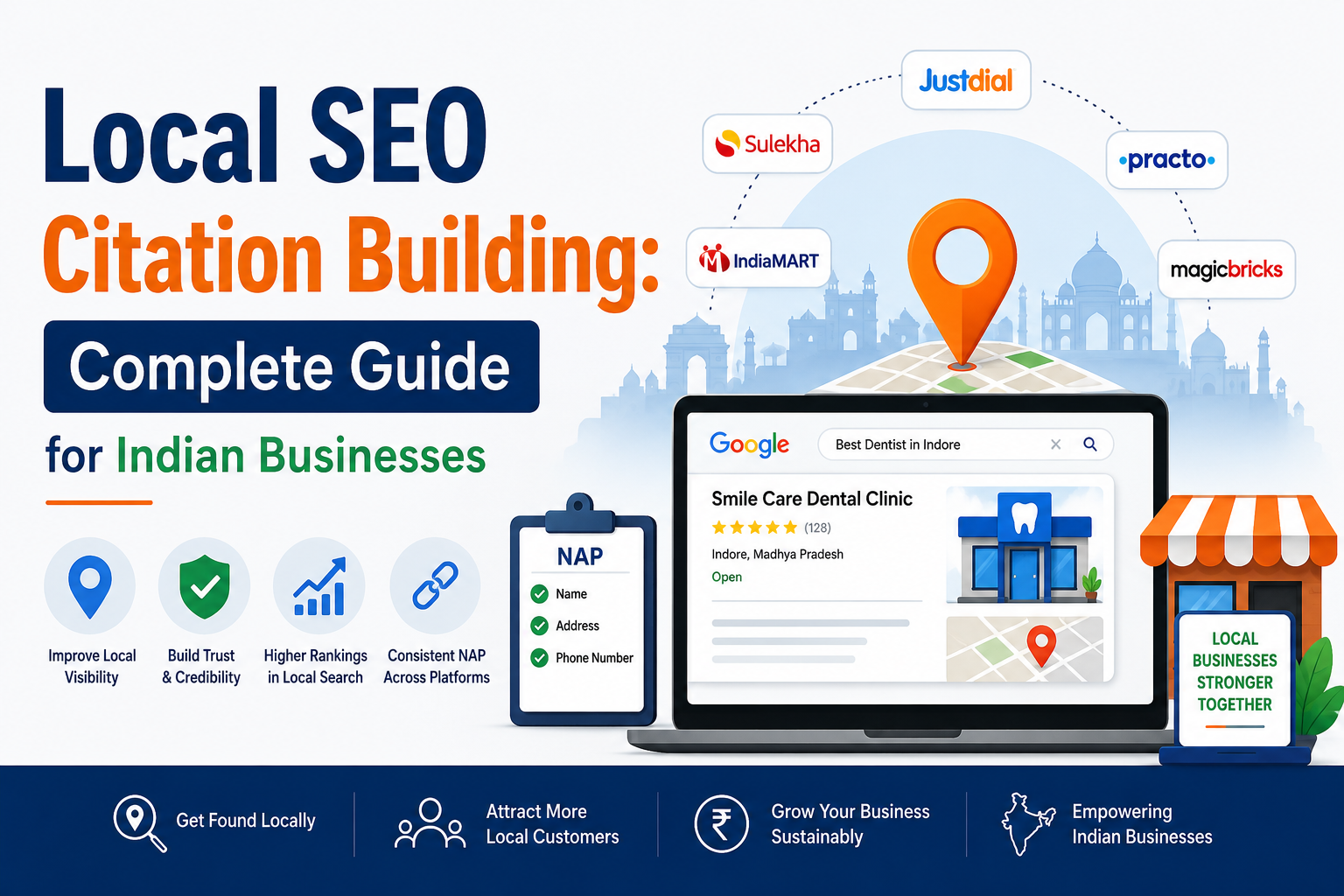
A local citation is any online mention of your company’s Name, Address, and Phone number (commonly abbreviated as NAP). These mentions can appear on local business directories, websites, apps, and social media networks. Citations do not necessarily need to include a link back to your website to provide SEO value; the text-based mention of your business data itself is a powerful signal to search engines.
There are two primary categories of citations: structured and unstructured. Structured citations are found on formal online business directories India, where the information is displayed in a neat, uniform layout (such as on Justdial, Sulekha, or IndiaMART). Unstructured citations occur when your business details are mentioned on blogs, news websites, digital press releases, or social media posts in a more free-form text format.
Why Citations Matter for Indian SMBs
For small and medium businesses operating across India, citations are the digital equivalent of word-of-mouth recommendations. Google’s algorithm uses these mentions to verify the legitimacy of your business. If your company information appears consistently across fifty different high-authority websites, Google gains the confidence required to display your business prominently in local search results.
Furthermore, India’s unique consumer behavior relies heavily on aggregated directories. Millions of users search for services directly within platforms like Justdial or Sulekha before they ever check an individual business’s website. By scaling your business citation building efforts, you open up secondary traffic channels that capture high-intent leads who are ready to make a purchase decision immediately.
The Correlation Between Citations and Local Search Rankings
Google determines its local search rankings based on three core pillars: relevance, distance, and prominence. While distance depends entirely on the user’s location, you can directly influence relevance and prominence. Citations are a foundational component of the prominence pillar.
| Citation Component | Search Engine Interpretation | Business Value |
| Consistent NAP Data | Verifies physical existence and operational legitimacy. | Reduces user friction and builds consumer trust. |
| Directory Authority | Transfers domain trust to your local digital ecosystem. | Boosts performance in competitive local markets. |
| Volume of Mentions | Indicates market prominence and popular local demand. | Increases chances of entering the Google Local 3-Pack. |
When search engine crawlers explore the web and find identical NAP data across dozens of authoritative directories, they assign a higher trust score to your business. This vote of confidence directly improves your local search rankings, making you the default choice when nearby consumers search for your specific products or services.
Anatomy of a Perfect Local SEO Citation
Building a citation is simple, but building a perfect citation requires meticulous attention to detail. A flawed citation structure can do more harm than good, muddying your data ecosystem and confusing Google’s crawlers. To get the best ROI from your local SEO strategy India, you must treat your business data with absolute precision.
The core of every citation is the NAP data, but modern local SEO demands more than just three lines of text. A truly optimized listing incorporates a variety of rich media and contextual data fields that make your business more attractive to both search engine algorithms and human users.
┌────────────────────────────────────────────────────────────────────────┐
│                      Anatomy of a Perfect Citation                     │
├────────────────────────────────────────────────────────────────────────┤
│  [Logo]  **Official Business Name (Registered Brand Name)**            │
│          Category: Specialized Industry Niche                          │
│                                                                        │
│  📍  Exact Physical Address (Matching Postal Records)                 │
│  📞  Dedicated Local Phone Number (With City Area Code)                 │
│  🌐  Clean, Secure Website URL (With Localized UTM Tracking)          │
│                                                                        │
│  📝  Detailed Business Description (Enriched with Secondary Keywords)  │
│  📸  High-Resolution Geo-Tagged Images & Documented Operating Hours     │
└────────────────────────────────────────────────────────────────────────┘
Deciphering the Power of NAP Consistency
NAP consistency is the golden rule of local search engine optimization. If your office is located in Sector 62, Noida, your address must be written identically across every single platform you touch. If you write “Sector 62” on your Google Profile, but use “Sec-62” on Justdial and “Block C, Sector 62” on Sulekha, search engine algorithms may view these as separate entities or penalize your listing for inconsistent data.
This issue becomes even more complicated in India, where addresses are naturally complex and frequently include landmarks (“Opposite Metro Pillar 120” or “Behind Apollo Hospital”). Select a single, standardized format based on your official registration documents or utility bills, and use that exact string of text everywhere.
Essential Elements Beyond Name, Address, and Phone Number
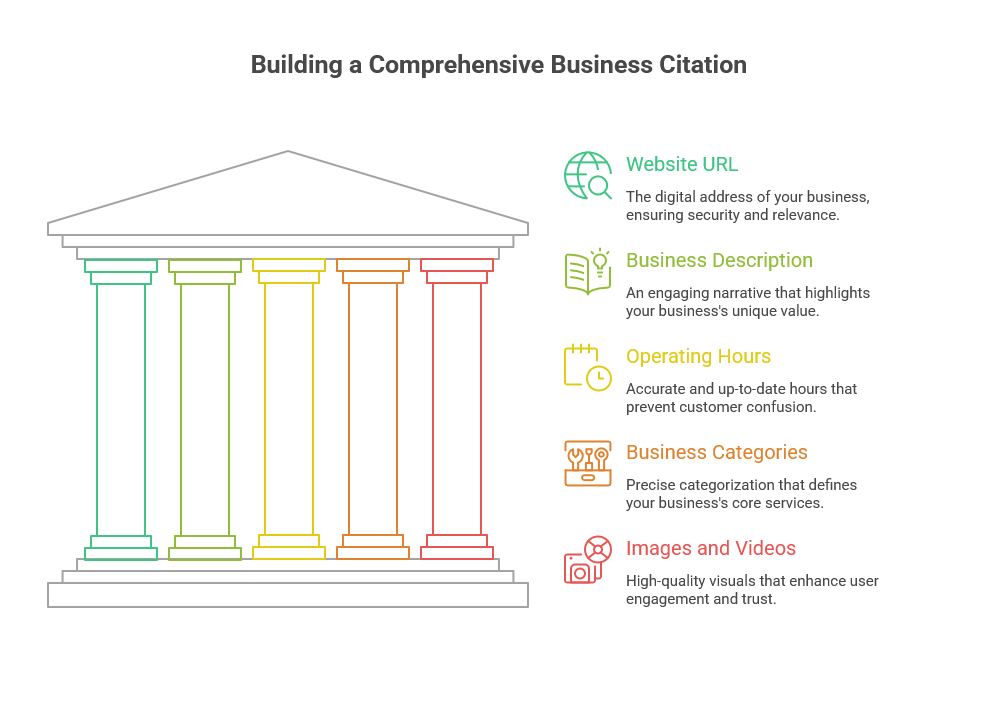
While Name, Address, and Phone form the foundation, a complete citation includes several secondary data fields. These fields provide search engines with contextual data that helps them determine the relevance of your business to specific user queries:
- Website URL: Always point to your clean, primary homepage or a dedicated, location-specific landing page. Use HTTPS to guarantee security.
- Business Description: Write an informative, engaging description of your business. This is an excellent opportunity to naturally include secondary keywords like local SEO for Indian businesses without keyword stuffing.
- Operating Hours: Ensure your opening and closing times are accurate, including holiday hours. Confusing a customer about your operating hours can lead to a negative review.
- Business Categories: Choose the most accurate primary and secondary categories available on the platform. This defines the core nature of your business for search engine crawlers.
- Images and Videos: Upload high-resolution photos of your storefront, office interior, and team. Photos increase user engagement and build immediate consumer trust.
Common Citation Formatting Mistakes in India
The unique landscape of the Indian market leads to several common citation errors that disrupt your local SEO performance. One frequent mistake is using a mobile phone number as the primary business contact instead of a dedicated local landline number. While mobile numbers are common for SMBs in India, a landline number containing a specific area code (such as 0120 for Noida or 011 for Delhi) provides a stronger geographical signal to search engines.
Another major issue is the misuse of shared business spaces or fake virtual offices to target multiple cities. Google’s quality guidelines are strict regarding physical verification. Relying on PO boxes or unverified virtual addresses can result in a sudden suspension of your Google Business Profile optimization efforts, erasing your local search visibility overnight.
Optimizing Your Google Business Profile (GBP) as the Anchor
Your Google Business Profile (formerly Google My Business) is the undisputed anchor of your local SEO strategy. Think of it as your digital storefront. Every other citation you build across the internet serves to validate and reinforce the information listed on your GBP. If your GBP is neglected or unoptimized, your external citation building efforts will fail to deliver meaningful results.
Optimizing a GBP for an Indian audience requires a hands-on approach. Given the high volume of mobile searches across India, your profile must look flawless on small screens, offering immediate answers to users looking for fast solutions.
Step-by-Step Google Business Profile Optimization
To claim and optimize your profile, log into the Google Business Profile manager and ensure every section is filled out completely. Start with your business name. Do not include promotional keywords or taglines in your official business name unless they are part of your legally registered corporate identity, as this violates Google’s terms of service and invites competitor flags.
Select your primary category with care, as it holds the most weight in Google’s ranking algorithm. If you run a premium boutique stay, select “Hotel” or “Boutique Hotel” rather than a broad category like “Business.”
Next, refine your service areas. For Indian businesses, specifying exact neighborhoods, pin codes, or districts helps Google understand your precise service radius, which prevents unqualified leads from diluting your conversion metrics.
       ┌────────────────────────────────────────────────────────┐
       │      Google Business Profile Optimization Funnel       │
       └───────────────────────────┬────────────────────────────┘
                                   │
                                   ▼
                       ┌────────────────────────┐
                       │  Claim & Verify Profile│
                       └───────────┬────────────┘
                                   │
                                   ▼
                       ┌────────────────────────┐
                       │ Standardize NAP Format │
                       └───────────┬────────────┘
                                   │
                                   ▼
                       ┌────────────────────────┐
                       │ Select Core Categories │
                       └───────────┬────────────┘
                                   │
                                   ▼
                       ┌────────────────────────┐
                       │ Upload Geo-Tagged Media│
                       └───────────┬────────────┘
                                   │
                                   ▼
                       ┌────────────────────────┐
                       │ Activate User Reviews  │
                       └────────────────────────┘
Leveraging Local Keywords within Your Profile
While you should avoid stuffing keywords into your business name, you can naturally weave high-value phrases into your business description, services list, and product updates. Use phrases like local business listings India or city-specific terms to establish your regional relevance.
When writing your 750-character business description, focus on what makes your business unique. Describe your core offerings, mention your history in the region, and include clear calls to action. This description helps Google’s semantic search engine understand the broader context of your business operations.
💡 Actionable Tip: Use the “Updates” feature within your Google Business Profile to publish weekly posts. Share festival greetings, highlight seasonal discounts, or announce new service rollouts. Regular posting signals to Google that your business is highly active, which can give your profile a competitive edge in local search visibility.
Top Online Business Directories and Citation Sources in India
Not all citation sources are created equal. Getting your business listed on a high-authority, trusted portal is worth more than hundreds of listings on obscure web directories that search engines ignore. To build an effective local footprint, you must focus on the primary platforms that both Indian consumers and search engine crawlers rely on.
The directory ecosystem in India is divided into general, high-traffic directories, hyper-local portals, and industry-specific platforms. A balanced approach ensures that your business gains broad authority along with deep contextual relevance within your specific niche.
High-Authority General Directories in India
To establish a strong foundation, secure listings on the largest general business platforms in India. These websites have massive domain authority, meaning search engine crawlers index them frequently and trust the data they hold.
- Justdial: The pioneer of local search in India. A complete, un-paid listing here offers strong local citation signals.
- Sulekha: Excellent for service-oriented businesses, matching local service providers with active consumers.
- IndiaMART: A vital directory for B2B enterprises, manufacturers, and bulk suppliers across India.
- TradeIndia: Another high-authority B2B directory that provides strong citation signals for industrial and commercial operations.
- Yellow Pages India: The digital version of the classic directory, offering clean structured citation formats.
Industry-Specific (Niche) Directories
Once you secure your general listings, focus on niche directories. These platforms are highly valued by search engines because they provide deep industry relevance.
                   ┌──────────────────────────────────────┐
                   │    Niche Citation Ecosystem India    │
                   └──────────────────┬───────────────────┘
                                      │
            ┌─────────────────────────┼─────────────────────────┐
            ▼                         ▼                         ▼
  ┌──────────────────┐      ┌──────────────────┐      ┌──────────────────┐
  │   Real Estate    │      │  Medical/Health  │      │Hospitality/Food  │
  ├──────────────────┤      ├──────────────────┤      ├──────────────────┤
  │  • MagicBricks   │      │  • Practo        │      │  • Zomato        │
  │  • 99acres       │      │  • Lybrate       │      │  • Tripadvisor   │
  │  • Housing.com   │      │  • 1mg           │      │  • EazyDiner     │
  └──────────────────┘      └──────────────────┘      └──────────────────┘
If you operate a specialized agency or consultancy, getting listed on platforms like Clutch, GoodFirms, or regional business networks provides the exact contextual authority that search engines look for when ranking complex queries. For more advanced support in aligning these listings with your overall technical framework, exploring dedicated WordPress SEO services can help bridge the gap between your on-page structure and off-page citations.
Regional and City-Specific Citation Sources
India’s vast geography means that local business dynamics change from state to state. Securing citations on regional directories or city-specific business associations provides excellent local relevance. Look for local chamber of commerce websites, resident welfare association (RWA) portals, or city-centric blogs (such as LBB for Delhi-NCR, Mumbai, and Bangalore).
Listing your business on these hyper-local platforms signals to Google that your business is deeply integrated into the local community. This local relevance makes your company the most logical answer for search queries originating within your specific city.
Step-by-Step Local Citation Building Framework
With a solid understanding of the theory and platforms, you can implement a structured framework to build your citations. Speed running this process by manually submitting to random sites without an organized plan often leads to errors, duplicate profiles, and wasted effort. Follow this step-by-step framework to ensure accuracy and scale your local presence efficiently.
Step 1: Conduct a Comprehensive Local Citation Audit
  └── Find all existing mentions, flag errors, and identify duplicate profiles.

Step 2: Clean Up Inconsistent NAP Data
  └── Fix typos, update addresses, and eliminate duplicate profiles manually.

Step 3: Execute a Strategic Citation Campaigns
  └── Target high-authority general directories, then layer in niche-specific portals.

Step 4: Maintain Ongoing Profiles and Track Long-Term Health
  └── Track your listings, update seasonal hours, and manage user reviews.
Step 1: Conduct a Comprehensive Local Citation Audit
Before creating new listings, you must understand your existing digital footprint. Search for your business name, previous phone numbers, old office addresses, and brand variations across Google. Document every listing you discover in a central spreadsheet.
Note any errors, typos, missing website links, or duplicate profiles on the same directory. This audit forms your roadmap, showing you exactly what needs to be fixed before you begin expanding your reach.
Step 2: Clean Up Inconsistent NAP Data
Fixing old errors is more important than building new listings. Inconsistent data confuses search engines and dilutes your ranking authority. Contact the customer support teams of directories containing incorrect data, or log into your old accounts to manually update the information.
If you find duplicate listings on a single platform like Justdial, use their “Report Duplicate” or “Flag Listing” tools to merge or remove the extra profiles. Your goal is a clean digital footprint where every platform displays your exact, standardized NAP data.
Step 3: Execute Strategic Citation Campaigns
Now you can begin building new listings. Start with high-authority general directories, then move to your niche-specific and regional platforms.
Keep a master document containing your standardized NAP data, official business description, brand logos, and image assets. Copy and paste this information directly into each directory registration form to prevent typos and maintain absolute data consistency.
Step 4: Maintain Ongoing Profiles and Track Long-Term Health
Citation building is an ongoing process, not a one-time project. Set aside time each quarter to review your primary listings, update your hours for major holidays, and upload fresh photos. This regular maintenance keeps your profiles active and signals to search engines that your business details remain accurate and reliable.
Managing the Complexities of Multi-Location SEO in India
Expanding your business to multiple offices or retail stores across India introduces new challenges to your local SEO strategy. Managing a single physical storefront requires consistent attention; managing five, ten, or fifty distinct locations across different states requires a highly scalable system to avoid data fragmentation.
                     ┌────────────────────────────────────────┐
                     │ Multi-Location Landing Page Structure  │
                     └───────────────────┬────────────────────┘
                                         │
             ┌───────────────────────────┴───────────────────────────┐
             ▼                                                       ▼
┌───────────────────────────┐                           ┌───────────────────────────┐
│ /locations/noida/         │                           │ /locations/gurugram/      │
├───────────────────────────┤                           ├───────────────────────────┤
│ • Noida Specific NAP      │                           │ • Gurugram Specific NAP   │
│ • Embedded Noida Map      │                           │ • Embedded Gurugram Map   │
│ • Noida Team & Reviews    │                           │ • Gurugram Team & Reviews │
│ • Localized Schema Markup │                           │ • Localized Schema Markup │
└───────────────────────────┘                           └───────────────────────────┘
The most common error multi-location businesses make is pointing every single directory listing back to their primary corporate homepage. This breaks the local relevance chain. Google wants to see a direct link between a specific local storefront listing and a web page tailored to that exact location.
Structuring Your Website for Multi-Location Citations
To manage multiple locations effectively, build dedicated, location-specific landing pages on your primary website. For example, create clean URLs for each branch office, such as:
[yourwebsite.com/locations/noida/](https://yourwebsite.com/locations/noida/)[yourwebsite.com/locations/gurugram/](https://yourwebsite.com/locations/gurugram/)[yourwebsite.com/locations/bengaluru/](https://yourwebsite.com/locations/bengaluru/)
Each dedicated landing page must display the unique NAP data, localized driving directions, embedded Google Maps, localized client testimonials, and operating hours for that specific branch. When you build citations for your Noida office, use the unique Noida URL as your website link. This structure passes deep geographical relevance down to individual locations, boosting their performance in regional search results.
Scaling Citation Workloads Across Diverse Regions
When managing multiple locations across different linguistic and cultural regions in India, your citation strategy should adapt accordingly. While your core corporate details remain unified, your local content should reflect the specific market.
| Multi-Location Challenge | Tactical SEO Solution | Operational Impact |
| Regional Language Variances | Use localized business descriptions where appropriate. | Improves user engagement and brand trust. |
| Vast Scale of Data Entry | Use automated toolsets for large-scale management. | Reduces manual data entry errors. |
| Fragmented Local Reviews | Deploy localized review generation campaigns. | Boosts local 3-pack rankings by city. |
For businesses scaling across dozens of locations, manual data entry becomes inefficient and prone to errors. Utilizing dedicated citation management services allows your team to push accurate data updates across your entire network from a single dashboard, saving time and keeping your data ecosystem clean.
Advanced Local SEO Strategies: Schema and Review Acquisition
Once your citation framework is built and cleaned, you can implement advanced tactics to outpace your local competitors. To rank at the top of highly competitive niches in major metro areas, complement your structured citations with localized schema markup and a proactive review acquisition strategy.
These advanced strategies bridge the gap between simple text listings and a highly interactive digital presence. They provide search engines with rich context while building immediate trust with consumers who discover your brand online.
Implementing Local Business Schema Markup
Schema markup is a structured data code added to your website that helps search engine crawlers understand your content with absolute clarity. By adding LocalBusiness or specialized schema (like ProfessionalService or MedicalBusiness) to your location pages, you tell Google exactly what you do and where you are located.
Your schema code must match the NAP details listed across your online profiles and directories. When Google detects a perfect match between your on-page schema code and your off-page citations, it assigns a much higher confidence score to your business data, which can improve your local search visibility.
JSON
{
  "@context": "https://schema.org",
  "@type": "LocalBusiness",
  "name": "WP Badgers",
  "image": "https://wpbadgers.com/wp-content/uploads/logo.png",
  "url": "https://wpbadgers.com",
  "telephone": "+91-XXXX-XXXXXX",
  "address": {
    "@type": "PostalAddress",
    "streetAddress": "Sector 62",
    "addressLocality": "Noida",
    "addressRegion": "Uttar Pradesh",
    "postalCode": "201301",
    "addressCountry": "IN"
  },
  "geo": {
    "@type": "GeoCoordinates",
    "latitude": 28.6282,
    "longitude": 77.3649
  }
}
The Synergy Between Customer Reviews and Citations
Citations establish your business’s physical presence, but user reviews establish your credibility and reputation. Google’s algorithm tracks both the volume and sentiment of reviews across your Google Business Profile and third-party platforms like Justdial or Facebook. A profile with hundreds of accurate citations backed by consistent 5-star user reviews signals strong market prominence.
Create a simple system to collect feedback from happy clients. Send a direct link to your Google review page via WhatsApp or email immediately after completing a project or delivering a service.
Always respond to the reviews you receive, whether they are positive or negative. Incorporating natural geographical terms into your responses (e.g., “Thank you for choosing our team for your web design project in Noida!”) adds subtle contextual signals that search engines value.
Avoiding Pitfalls: The Cost of Inaccurate Data and Spam Tactics
As you scale your local optimization efforts, prioritize quality and adherence to search engine guidelines. Many businesses fall into the trap of using black-hat techniques or automated spam tools to create hundreds of low-quality listings overnight. In local search, shortcuts often lead to algorithmic penalties that drop your visibility entirely.
   ┌─────────────────────────────────────────────────────────┐
   │        The Lifecycle of Inaccurate Citation Data        │
   └────────────────────────────┬────────────────────────────┘
                                │
                                ▼
                  ┌───────────────────────────┐
                  │ Outdated NAP Left on Web  │
                  └─────────────┬─────────────┘
                                │
                                ▼
                  ┌───────────────────────────┐
                  │ Google Crawlers Flag Data │
                  │       Inconsistencies     │
                  └─────────────┬─────────────┘
                                │
                                ▼
                  ┌───────────────────────────┐
                  │ Trust Score Drops; Local  │
                  │   3-Pack Rankings Fall    │
                  └─────────────┬─────────────┘
                                │
                                ▼
                  ┌───────────────────────────┐
                  │ Customers Find Broken Data│
                  │  and Turn to Competitors  │
                  └───────────────────────────┘
Understanding the risks of poor data management protects your brand from sudden losses in search traffic. Maintaining clean, accurate information builds long-term authority that algorithm updates will not disrupt.
The True Cost of Inaccurate Local Data
Inaccurate digital citations harm your business in two major ways: they confuse search engine algorithms, and they frustrate real customers. If a potential client finds an outdated phone number on a directory listing, they will likely hang up and call a competitor rather than hunt for your correct contact details.
For search engines, inconsistent data lowers your overall trust score. When Google’s crawlers find conflicting addresses across the web, the algorithm lowers your local search ranking to avoid showing inaccurate information to its users.
Spotting and Avoiding Spammy Citation Building Services
The digital market features many low-cost agencies offering to build hundreds of directory listings for a minimal fee. These services often rely on automated software to spam low-quality, unmoderated link farms that Google completely ignores or flags as spam.
When evaluating local citation services India, avoid providers that promise instant top rankings or offer bulk packages on obscure, generic websites. Partner with reputable providers who emphasize manual submission, careful data verification, transparent reporting, and ongoing profile maintenance.
Summary of the Complete Citation Building Strategy
┌────────────────────────────────────────────────────────────────────────┐
│                        Local SEO Checklist                             │
├────────────────────────────────────────────────────────────────────────┤
│ ▢ Audit Your Existing Digital Footprint Across the Web                 │
│ ▢ Standardize Your Core NAP Details into a Single Format               │
│ ▢ Fully Claim, Verify, and Update Your Google Business Profile         │
│ ▢ Build High-Quality Listings on Top General Indian Directories       │
│ ▢ Secure Niche-Specific and Hyper-Local Citation Placements           │
│ ▢ Remove or Merge Broken Duplicate Profiles Manually                    │
│ ▢ Deploy Dedicated Landing Pages for Multi-Location Operations         │
│ ▢ Implement LocalBusiness Schema Markup Code on Your Website           │
│ ▢ Build a Proactive Strategy to Collect and Answer Client Reviews      │
└────────────────────────────────────────────────────────────────────────┘
Managing a comprehensive local SEO campaign requires consistent time, precision, and technical expertise. If you want to offload the complexity of directory management and data audits to professionals, WP Badgers can help. Our team has helped over 80 businesses grow online by building high-performing, search-optimized digital presences that drive real revenue.
Frequently Asked Questions (FAQs)
1. What is local SEO citation building?
Local SEO citation building is the strategic process of submitting your business’s Name, Address, and Phone number (NAP) across online business directories, review portals, and social media platforms. These digital mentions verify your physical presence and improve your local search engine visibility.
2. Why is NAP consistency important for Indian businesses?
NAP consistency guarantees that search engines find identical information for your business across the web. Variations or typos confuse algorithms, lower your domain trust score, and can cause your business to drop out of the Google Local 3-Pack rankings.
3. How long does it take to see results from citation building?
Typically, it takes between 4 to 8 weeks for search engines to crawl, index, and verify new business citations. The overall impact on your local search engine rankings will scale over time as your data footprint stabilizes.
4. Can I use a mobile number for local business listings in India?
Yes, you can use a mobile number, but using a dedicated local landline number with an area code (e.g., 0120 for Noida) provides a stronger geographical signal to search engines, which can benefit your local optimization efforts.
5. What are duplicate citations, and why are they harmful?
Duplicate citations occur when a single online directory has multiple listings for the same business location. This duplication fragments your ranking authority and confuses search engine crawlers, which can lower your overall local search visibility.
6. Should I pay for premium listings on Indian directories?
For most businesses, the free tier on major directories provides the necessary citation value for SEO purposes. Premium paid listings are worth considering only if the directory itself drives a high volume of direct customer leads for your industry.
7. What is the difference between structured and unstructured citations?
Structured citations appear on formal business directories where your NAP information is displayed in a uniform layout. Unstructured citations are mentions of your business details within free-form text on blogs, news sites, or social media platforms.
Conclusion
Building a strong network of accurate business citations is one of the first things an Indian business should focus on when it wants to improve its local online visibility. The first step is pretty simple: make sure your NAP information—your business name, address, and phone number—is exactly the same everywhere. From there, fully optimize your Google Business Profile and get your business listed on reputable local, regional, and industry-specific directories.
These consistent signals make it easier for search engines to understand who you are, what your business does, and where you serve customers. In the long run, this can help improve your local rankings, increase your visibility on Google Maps, and bring in more qualified local leads.
WordPress SEO Services can also play an important role here. A well-optimized website can improve your search visibility, rankings, organic traffic, and overall website performance. Basically, the goal is to make it easier for people to find your business when they’re already searching for the products or services you offer.
Now, citation building itself isn’t really that complicated. The tricky part is keeping your business information accurate across so many different platforms. That’s why it’s better not to take shortcuts or submit your business to every directory you come across. Instead, focus on quality, relevance, and consistency. Trust me, having a few solid and relevant listings is usually much more useful than having your business listed on dozens of random directories.
It’s also a good idea to audit your citations from time to time. Business details can change—maybe you move to a new location, change your phone number, or update your business name—and those outdated details can create unnecessary confusion for both customers and search engines.
You can also use tools like Google Search Console to keep track of your website’s search performance and identify potential issues that might be affecting your visibility. It doesn’t have to be complicated. Just keep an eye on your important business information, fix outdated listings when you find them, and stay consistent.
At the end of the day, local SEO is more about being consistent and methodical than trying to find quick hacks. If you build accurate citations, maintain your listings, and support them with a properly optimized website, you can gradually build stronger local authority and make it easier for nearby customers to find your business when they’re ready to buy.
Ready to dominate your local market and secure your spot in the Google Local 3-Pack? Contact WP Badgers today for a free SEO consultation.