
You spent weeks building your WordPress website.
You chose the theme carefully.
You wrote every page yourself.
You even installed an SEO plugin because someone said it helps.
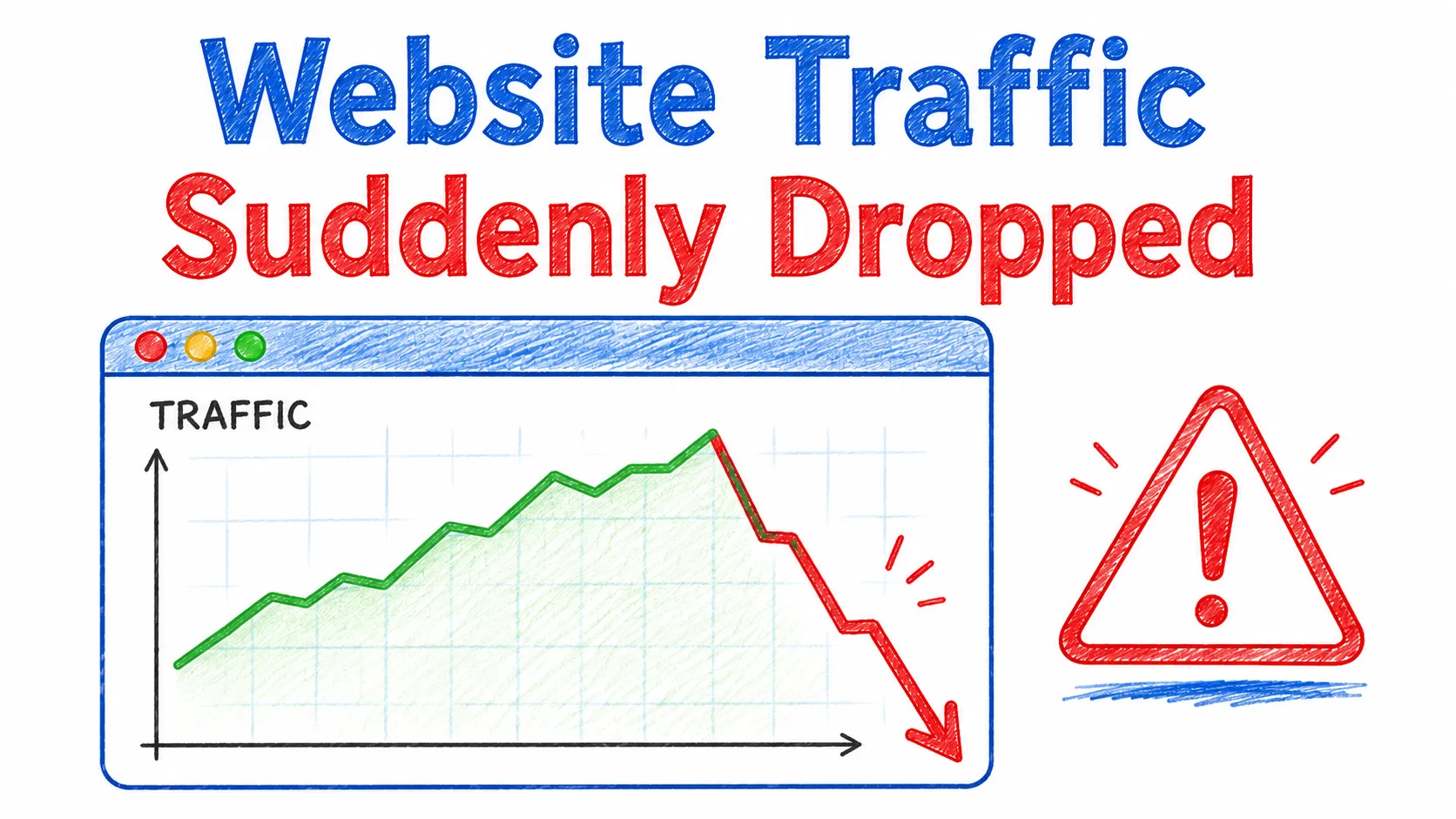
Then you typed your business name into Google.
Nothing.
Not on page one.
Not on page five.
Maybe not at all.
And now you are asking the question almost every small business owner asks at some point:
Why is my WordPress site not ranking on Google?
Let’s walk through this properly. Not with generic advice. But with the exact issues I repeatedly see holding WordPress websites back.
What Is “Not Ranking” in SEO Terms?
If your WordPress site is not ranking on Google, it means your pages are either not indexed, not optimized for relevant keywords, technically blocked from crawling, or not strong enough in authority compared to competitors targeting the same search terms.
Ranking problems usually fall into three buckets:
- Technical issues
- On-page SEO problems
- Authority and trust gaps
Let’s break them down.
Why Most WordPress Sites Fail to Rank
Before we jump to fixes, understand this.
Google does not rank websites.
It ranks pages.
And it ranks them based on:
- Relevance
- Quality
- Experience
- Authority
- Technical health
Many WordPress not ranking problems are not because WordPress is bad. It is because the setup is incomplete or misunderstood.
Now let’s fix that.
If you are new to optimization, you should first read our guide on What Is WordPress SEO and Why Is It Important? to build a strong foundation.
12 Proven Fixes to Improve WordPress Ranking
1. Your Site Is Not Indexed
If your WordPress site is not indexed, Google cannot rank it. This usually happens when search engines are blocked in settings or when the site has not been submitted to Google Search Console.
Check this immediately:
- Go to Settings → Reading
- Make sure “Discourage search engines from indexing this site” is unchecked
- Search in Google: site:yourdomain.com
- Connect your site to Google Search Console
You would be surprised how many business sites are invisible because of one checkbox.
2. You Are Targeting the Wrong Keywords
Many small business owners write what they want to say.
Google ranks what people search.
If you are trying to rank for “best marketing solutions provider” but your customers search “affordable social media manager near me,” you have a mismatch.
To improve WordPress ranking:
- Use keyword research tools
- Focus on search intent
- Target long-tail keywords
- Match content with user queries
Ranking is about alignment, not creativity.
3. Your Content Is Too Thin
Google prefers depth.
If your service page is 300 words long and your competitor has 2,000 words covering FAQs, examples, pricing clarity, and process explanation, who looks more helpful?
Thin content is one of the biggest WordPress SEO issues.
Fix it by:
- Expanding service pages
- Adding real examples
- Including FAQs
- Explaining process step by step
Content should answer everything a potential customer might ask.
4. You Have Technical SEO Problems
Technical SEO issues such as slow speed, broken links, poor mobile optimization, missing sitemap, or crawl errors can prevent your WordPress site from ranking even if your content is good.
Check:
- Page speed
- Mobile usability
- XML sitemap
- Broken links
- Core Web Vitals
Tools like Google Search Console and PageSpeed Insights are essential here.
5. Your Website Is Too Slow
Speed affects rankings.
A slow WordPress site often comes from:
- Heavy themes
- Too many plugins
- Large uncompressed images
- Cheap hosting
You do not need fancy tools to understand this.
Open your website on mobile data. Does it feel fast?
If not, Google notices too.
6. Poor Internal Linking
Most small business sites have pages floating independently.
Google needs structure.
Internal linking helps:
- Distribute authority
- Clarify page relationships
- Improve crawl efficiency
Example:
If you write a blog about “improve WordPress ranking,” link it to your SEO service page naturally.
This strengthens topical relevance.
7. Weak On-Page Optimization
Basic but powerful.
Each page should have:
- One clear primary keyword
- Optimized title tag
- Meta description
- Proper H1, H2, H3 structure
- Keyword in first 100 words
- Descriptive alt text on images
Many WordPress not ranking cases happen because titles are generic like “Home” or “Services.”
Google needs clarity.
8. No Backlinks or Authority Signals
You cannot rank in competitive niches without authority. Period.
Backlinks tell Google that others trust you.
Ways to build authority:
- Guest posting
- Local citations
- Industry directories
- Digital PR
- Publishing high-value resources
Even a small number of quality links can shift rankings dramatically.
9. Duplicate Content Issues
WordPress can create duplicates through:
- Tag archives
- Category pages
- Pagination
- HTTP vs HTTPS versions
Duplicate content confuses search engines.
Use canonical tags properly.
Set preferred domain in Search Console.
Control indexing of low-value pages.
10. No Clear E-E-A-T Signals
Google evaluates:
- Experience
- Expertise
- Authority
- Trust
Your site should clearly show:
- Who you are
- Your credentials
- Testimonials
- Case studies
- Contact details
- Privacy policy
Small business owners often skip the About page depth. That is a mistake.
11. You Published and Expected Magic
Here’s the hard truth.
SEO takes time.
New domains typically take:
- 3 to 6 months for movement
- 6 to 12 months for strong traction
If your site is 30 days old, ranking delays are normal.
Consistency matters more than intensity.
12. You Are Competing Above Your Level
Trying to rank for “digital marketing agency” globally?
You are competing with massive domains.
Start with:
- Location-based keywords
- Long-tail queries
- Problem-focused searches
Build topical authority gradually.
👉 If you are confused about whether WordPress is still SEO friendly, check out our guide on Is WordPress Good for SEO in 2026? Pros, Cons & Truth before making a decision.
Mini Case Example
A solo consultant approached me frustrated.
Six months online.
Zero traffic.
After audit:
- Site was noindexed.
- No internal links.
- Service pages under 400 words.
- No keyword targeting.
We fixed technical settings, rewrote core pages, added FAQs, improved structure, built a few relevant backlinks.
Within four months, impressions increased 400 percent.
Leads started coming.
The problem was never WordPress.
It was an incomplete SEO execution.
Common Mistakes That Keep WordPress Sites Invisible
- Installing an SEO plugin and stopping there
- Ignoring search intent
- Publishing randomly without strategy
- Obsessing over design instead of content
- Avoiding backlinks
- Not tracking performance in Search Console
SEO is not one tweak. It is a system.
Insider Tip Most Blogs Miss
Topical authority beats isolated optimization.
Instead of writing one article on “Why is my WordPress site not ranking on Google,” create a cluster:
- Technical SEO guide
- Keyword research for beginners
- On-page SEO checklist
- Local SEO for small businesses
- WordPress speed optimization tutorial
Interlink them strategically.
Google starts seeing you as a subject authority.
That is how serious ranking growth happens.
Step-by-Step Action Plan to Fix WordPress SEO Issues
- Connect site to Google Search Console
- Check indexing status
- Run technical audit
- Identify keyword gaps
- Rewrite thin pages
- Improve internal linking
- Optimize titles and headings
- Add FAQs
- Build 5 to 10 quality backlinks
- Track progress monthly
SEO is momentum-based. Fixing multiple small issues compounds.
FAQ Section
Why is my WordPress site not ranking even after using an SEO plugin?
An SEO plugin helps with structure and metadata but does not guarantee rankings. Rankings depend on content quality, keyword targeting, backlinks, technical health, and search intent alignment. Plugins assist implementation, not strategy.
How long does it take for a WordPress site to rank?
Most new websites take 3 to 6 months to see initial ranking improvements. Competitive keywords may take longer. Consistent optimization, content publishing, and backlink building accelerate progress.
Does website speed affect WordPress ranking?
Yes. Slow-loading websites negatively impact user experience and Core Web Vitals, which influence rankings. Optimizing hosting, caching, images, and reducing plugin bloat improves speed and search visibility.
Can too many plugins hurt SEO?
Too many poorly coded plugins can slow your website and create conflicts, affecting performance and crawlability. It is better to use fewer, high-quality plugins and regularly audit them.
Why are my competitors ranking above me?
Competitors may have stronger backlinks, better content depth, clearer keyword targeting, and more established domain authority. Ranking is comparative. Google chooses the best available result for each query.
You built your website for a reason.
To generate leads.
To build credibility.
To grow.
If you are still wondering why your WordPress site is not ranking on Google, it usually means something small but critical is missing.
Sometimes you can fix it internally.
Sometimes you need an experienced eye to identify structural SEO gaps.
If you feel stuck, getting a professional WordPress SEO audit from WP badgers can clarify exactly what is holding your site back and how to improve WordPress ranking systematically.
Get Started Today
We are always here to
help you achieve the unimaginable

Because the real question is not why you are not ranking.
It is how long you are willing to stay invisible.