
Google quietly rolled out a small Google Search Console new property type update, and while it might look like just another interface change, it could signal a much bigger shift in how Google views brands online.
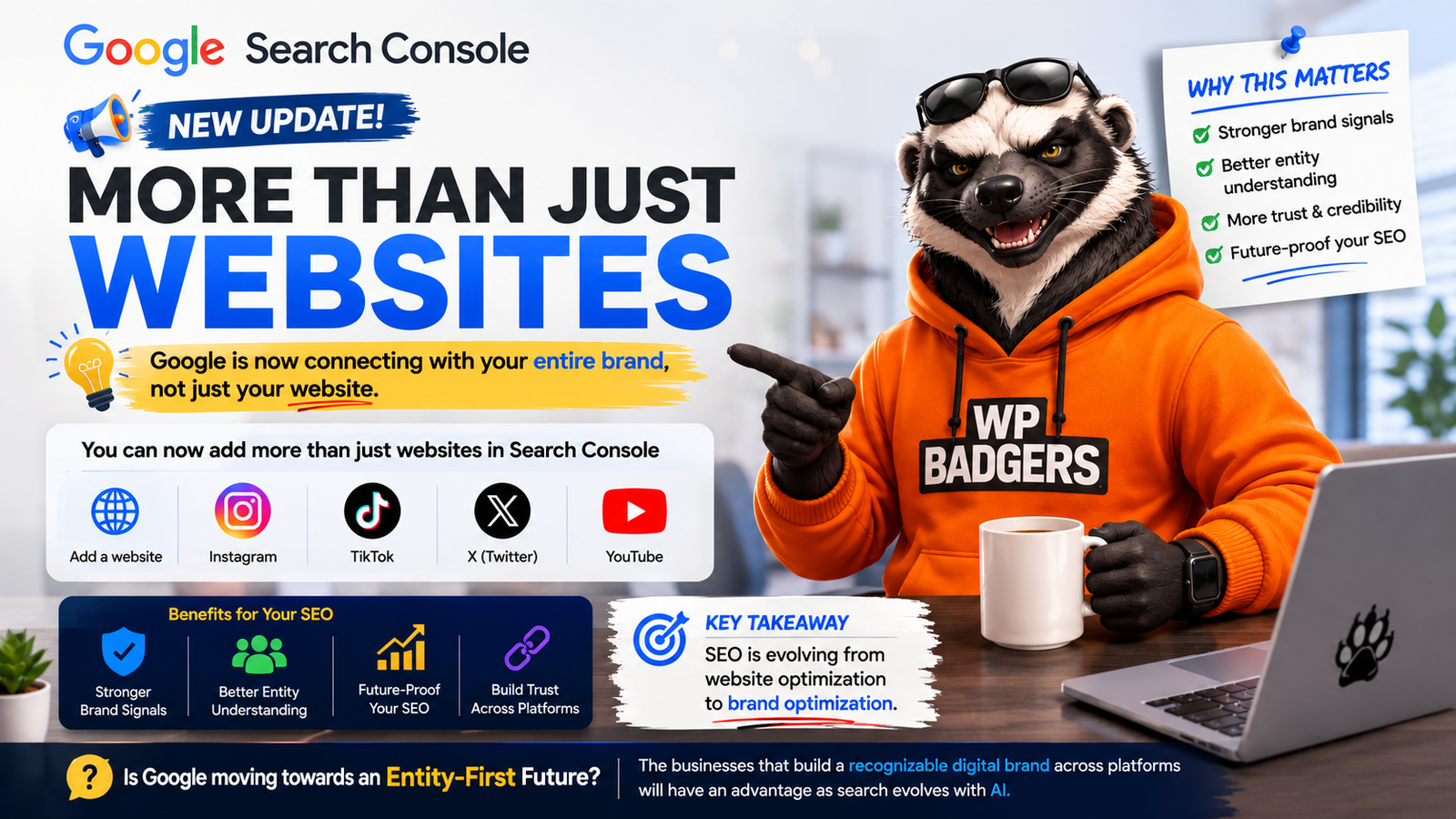
Instead of only allowing users to add a website, Search Console now also shows options to connect popular social media platforms like:
- TikTok
- X (formerly Twitter)
- YouTube
At first glance, this doesn’t seem like a major SEO update. But if you’ve been following Google’s direction over the last few years, you’ll know that Google is moving beyond just ranking web pages—it’s trying to understand brands, creators, and businesses as entities.
Let’s break down what this update means in simple language.
What Changed Google Search Console New Property Type Update?
Previously, when you wanted to add a property in Search Console, your only option was to verify a website.
Now, Google also displays social media platforms as property types.
Although these options don’t yet provide Search Console reports like websites do, their appearance is interesting because it suggests Google is expanding its ecosystem beyond traditional websites.
This doesn’t necessarily mean rankings will change tomorrow, but it does tell us something about Google’s future direction.
Why Is Google Doing This?
Google has one goal:
Understand who you are, not just what your website says.
Imagine two businesses selling the same product.
Business A
- Has a website only
- No social presence
- No YouTube videos
- No active audience
Business B
- Has an optimized website
- Active Instagram
- Educational YouTube channel
- Regular posts on X
- Consistent branding everywhere
Which business looks more trustworthy?
Most people would choose Business B.
Google thinks the same way.
SEO Is No Longer Just About Websites
A few years ago, SEO mainly focused on things like:
- Keywords
- Backlinks
- Meta titles
- Content optimization
These are still important.
But today, Google also wants to understand:
- Who owns the website?
- Is this a real business?
- Is the brand active online?
- Are people interacting with it?
- Does this brand exist consistently across multiple platforms?
That’s where your social profiles become valuable.
Understanding “Entity SEO” in Simple Words
The term Entity SEO sounds technical, but it’s actually simple.
Think of Google as a person meeting someone for the first time.
If that person sees you:
- On your website
- On Instagram
- On YouTube
- On LinkedIn
- On X
…using the same business name, logo, and information everywhere, they’ll quickly recognize you.
Google works in a similar way.
The more consistent your online identity is, the easier it becomes for Google to understand your business.
Does Connecting Social Profiles Improve Rankings?
The honest answer is:
There is no official confirmation from Google that simply connecting these platforms will improve your rankings.
However, maintaining a strong and consistent online presence can indirectly support your SEO efforts.
Here’s why.
When Google understands your brand better, it becomes easier to associate your content, mentions, and expertise across the web.
That’s valuable in today’s AI-driven search environment.
What Are Brand Signals?
Brand signals are pieces of information that help Google recognize your business.
Examples include:
- Your website
- Social media profiles
- YouTube channel
- Brand mentions
- Reviews
- Business citations
- Consistent logo
- Same business name across platforms
Think of them as digital proof that your business is genuine.
Why This Matters More Than Ever
Google has introduced many features over the years that focus on trust rather than just keywords.
Examples include:
- E-E-A-T (Experience, Expertise, Authoritativeness, and Trustworthiness)
- Knowledge Graph
- AI-powered search results
- Creator profiles
- Brand entities
This new Search Console update fits naturally into that larger trend.
Instead of only understanding web pages, Google wants to understand the people and businesses behind those pages.
What Should Website Owners Do?
If you own a website, this update is a good reminder to strengthen your overall online presence.
Here are a few practical steps:
1. Keep Your Social Profiles Active
You don’t need to post every day.
But avoid creating accounts and leaving them inactive for years.
Regular updates show that your business is active.
2. Use the Same Brand Name Everywhere
Your website, Instagram, YouTube, LinkedIn, Facebook, and X should all use the same business name whenever possible.
Consistency builds trust.
3. Link Everything Together
Make sure your:
- Website links to your social profiles.
- Social profiles link back to your website.
This helps users and search engines connect your digital presence.
4. Use the Same Logo
Avoid using different logos across different platforms.
Your visual identity should remain consistent.
5. Keep Business Information Consistent
Your:
- Business name
- Website URL
- Contact information
should remain the same across all platforms.
Is This an SEO Ranking Factor?
Not directly.
Google hasn’t announced that this feature is a ranking signal.
However, SEO isn’t only about ranking factors anymore.
It’s about building a trustworthy brand that users—and search engines—can recognize.
Many successful websites rank well not because of one specific trick, but because they consistently demonstrate credibility across the web.
My Thoughts
While this update may seem minor, it reflects a broader shift in Google’s approach to search.
SEO is evolving from simply optimizing web pages to building a recognizable digital brand.
As AI becomes more integrated into search, Google will likely rely even more on consistent brand signals to understand who you are and what your business represents.
If you focus only on keywords and ignore your brand presence, you could miss out on opportunities in the future.
Frequently Asked Questions (FAQs)
Does adding Instagram or YouTube in Google Search Console improve SEO?
There is no official confirmation that adding these profiles directly improves rankings. However, maintaining active and consistent social profiles can strengthen your brand’s online presence.
What is Entity SEO?
Entity SEO focuses on helping Google understand your business or brand across multiple sources, not just your website. Consistent branding, social profiles, and online mentions all contribute to this understanding.
Should every business create social media profiles?
If your audience uses those platforms, yes. Active and consistent profiles can improve brand visibility, trust, and customer engagement.
Is Google moving toward brand-based SEO?
Recent updates, including AI-powered search, E-E-A-T, and this Search Console change, suggest Google is placing greater emphasis on understanding brands and entities rather than just individual web pages.
Wrapping UP
Google’s new Search Console property update reminds us that SEO is no longer just about optimizing web pages-it’s about building a trusted digital brand.
Your website, technical SEO, content, and social presence all work together to help Google understand who you are and why your business deserves visibility.
If your WordPress website isn’t generating the organic traffic you expected, the issue may not be your business-it could be hidden technical SEO problems, weak site structure, or missed optimization opportunities.
At WP Badgers, we specialize in WordPress SEO Services that go beyond basic keyword optimization. From technical SEO audits and Core Web Vitals improvements to content strategy, internal linking, schema markup, and complete WordPress optimization, we help businesses build websites that both Google and users trust.
Want to know what’s holding your website back?
We’re happy to provide a free WordPress SEO audit with actionable recommendations-no obligations, just practical insights you can use to improve your website’s performance.
Get Started Today
We are always here to
help you achieve the unimaginable

Because in today’s SEO landscape, it’s not just about ranking pages-it’s about building a brand that deserves to rank.