
Key Takeaways
- AEO is the New Priority: Answer Engine Optimization focuses on providing direct, concise answers for AI agents and voice search.
- Structure is Strategy: The way you arrange headings and paragraphs determines if an AI can parse your “Answer.”
- Intent over Keywords: Modern frameworks prioritize the “User Intent” behind a question rather than just matching a phrase.
- Featured Snippet Bait: Mastering the “Snippet-First” paragraph structure is essential for winning the #0 spot on Google.
- Conversational Nuance: Content must mirror natural human speech to satisfy voice search queries from Siri, Alexa, and GPT-4o.
- Schema is the Language: Using FAQ Schema is the only way to “hardwire” your answers into the search engine’s knowledge graph.
Did you know that more than 50% of Google searches now end without a single click? At first, that might sound like search is dying, but that’s not really what’s happening. Search is simply changing. Google is becoming more of an “Answer Engine,” while platforms like Perplexity AI are changing the way people find and consume information. Instead of scrolling through a list of links, users increasingly want a clear, direct answer—and they want it fast.
If your brand is still relying on traditional long-form blogs without a clear structure, you could be missing out on one of the biggest shifts in digital marketing. In 2026, simply adding keywords to an article isn’t enough. You need to create content that actually answers the questions people are asking. That’s where Answer Engine Optimization (AEO) comes in.
In simple terms, AEO is about making your content easy for search engines and AI-powered platforms to understand, extract, and present as an answer. Rather than focusing only on ranking for keywords, you’re creating content around real questions, clear answers, and useful information.
In this guide, we’ll break down the AEO writing framework and show you how to structure your content for AEO. You’ll learn how to create question-based content, organize your answers clearly, and increase the chances of your brand being recognized as a reliable source by AI-driven search platforms.
Whether you’re running a local business in Noida or managing a global tech company, one thing is pretty clear: the way people search is changing, and your content strategy needs to change with it. The better you answer people’s questions, the better positioned your brand can be in this new era of search.
1. What is AEO and How Does it Differ from Traditional SEO?
Before diving into the framework, we must define the landscape. SEO vs AEO content writing is the difference between writing for a librarian and writing for a personal assistant.
Defining Answer Engine Optimization (AEO)
AEO is a subset of SEO that specifically focuses on making content easy for AI models and “Answer Engines” to synthesize. While traditional SEO aims to rank for a keyword, AEO aims to be the source for an answer. This requires a much higher level of factual accuracy and structural clarity.
The Shift from Keywords to Natural Language
In the past, we optimized for “Noida web design.” In the AEO era, we optimize for “Who is the most reliable WordPress web design agency in Noida?” The question-based content AEO framework recognizes that users now interact with search engines using full sentences and natural curiosity.
Why Your Content Strategy Needs AEO Now
AI models like ChatGPT and Google Gemini don’t browse the web like humans; they scrape and summarize. If your content isn’t “summary-ready,” it won’t be used in the generated response. An answer engine optimization content strategy ensures that your brand’s expertise is presented in a way that AI finds “delicious” and easy to digest.
2. The Core Components of the AEO Writing Framework
To successfully implement a question-based content AEO framework, you need to follow a specific structural blueprint. It isn’t just about what you say, but where you say it.
The Inverted Pyramid of Information
In AEO, you cannot afford to “bury the lead.” You must provide the most direct answer at the very beginning of a section.
- The Question (H2/H3): Clearly stated.
- The Answer (The Lead): 40–60 words of direct, factual response.
- The Context (Body): Deep dive, nuance, and supporting data.
Formatting for Machine Readability
AI search engines love lists, tables, and short paragraphs. When you optimize your WordPress SEO services, you must ensure that your CSS and HTML are clean so that the “Question and Answer” pairs are easily identifiable by crawlers.
The Role of Authority and Sourcing
AEO engines prioritize “Cited Sources.” To rank, your content must cite reputable studies, link to authoritative entities, and demonstrate clear E-E-A-T. An AEO writing framework guide is incomplete without a plan for external validation.
3. How to Write Question-Based Content that Wins
Writing for AEO is an art form. It requires a blend of journalistic precision and technical SEO knowledge. Here is how to write question-based content that captures the attention of AI agents.
Identifying the Right Questions
Use tools like “AlsoAsked” or “AnswerThePublic” to find the exact phrasing people use. Don’t guess. If users are asking “How much does a landing page cost in 2026?”, that should be your H2. This is the foundation of conversational search content writing.
The “Snippet-First” Writing Style
To win content for featured snippets and AI answers, your first sentence after a heading should directly address the heading. Avoid filler phrases like “That’s a great question.” Instead, go straight to the facts.
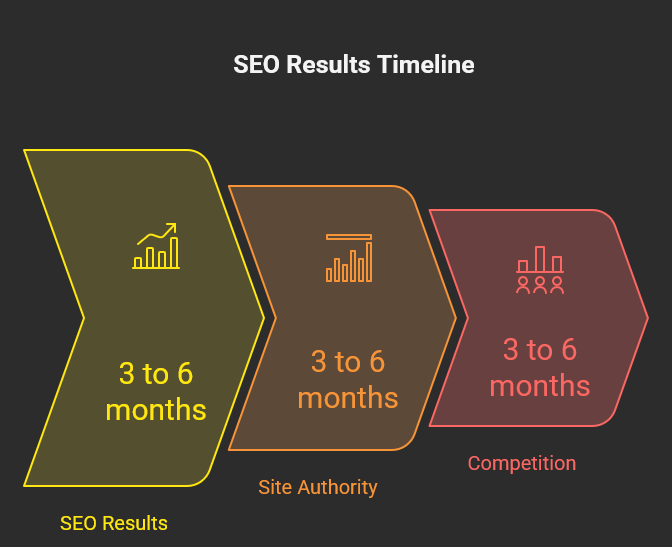
- Bad: “When it comes to SEO, many people wonder about the timeline for results.”
- AEO-Ready: “SEO results typically take 3 to 6 months to manifest, depending on site authority and competition.”
Actionable Tip: The FAQ Integration
Every blog post you write should have an FAQ section at the end. This isn’t just for the user; it’s for the FAQ Schema. By repeating the most important questions of the article in a structured format, you double your chances of being the “Selected Answer.”
| Feature | Traditional SEO Blog | AEO-Optimized Blog |
| Heading Goal | Keyword inclusion | Question inclusion |
| Intro Style | Hook and narrative | Direct answer and hook |
| Paragraphs | Long, descriptive | Short, fact-heavy |
| Data Usage | General references | Specific citations and tables |
4. How to Structure Content for AEO Success
The architecture of your page is what allows an AI to “trust” your answer. If the information is scattered, the AI will perceive it as low-quality.
Using Semantic HTML
Make sure your questions are wrapped in <h2> or <h3> tags and the following answer is in a <p> tag. This creates a clear parent-child relationship that search engines use to build their Knowledge Graphs. This is a core part of an FAQ content optimization strategy.
Creating Comparison Modules
AI loves to compare things. If your article is about “WordPress vs Shopify,” use a table. AI models can scrape tables much more accurately than they can parse a 500-word comparison paragraph. This makes your site a prime candidate for a “Comparison Snippet.”
The “Summary Box” Technique
At the top of your post, include a “Key Takeaways” or “Quick Answer” box. This provides a “High-Density Information” zone that AI search engines can pull from immediately. It also improves user experience for readers who are in a hurry.
5. Answer Engine Optimization Content Strategy: The 2026 Playbook
As we move further into 2026, the answer engine optimization content strategy must account for the multi-modal nature of search.
Optimizing for Voice Search Questions
People talk differently than they type. To optimize content for voice search questions, use long-tail, conversational keywords. Use phrases like “Near me,” “How do I,” and “What is the best way to.” Voice search is often local, so integrating your location (e.g., Noida) into your answers is vital.
Intent Mapping: Beyond the Surface
AEO isn’t just about answering “What is SEO?” It’s about answering the intent behind the question. If someone asks “What is SEO?”, their intent might be “How can I grow my business?” Your framework should address both the literal question and the logical next step.
Real-World Example: The HVAC Strategy
An HVAC company in a competitive market doesn’t just rank for “AC Repair.” They use a question-based content AEO framework to answer: “Why is my AC making a clicking sound?” By providing a diagnostic checklist, they win the featured snippet and the customer’s trust before the user even looks for a service page.
6. Content for Featured Snippets and AI Answers
Winning the “Zero Position” (Featured Snippet) is the ultimate goal of AEO. It provides the highest visibility and establishes your brand as the definitive authority.
The Definition Snippet
This is a short, dictionary-style answer to a “What is” question. To win this, use the format: “[Term] is [Definition].” Keep it under 50 words. This is the bread and butter of how to write question-based content.
The Listicle Snippet
For “How to” or “Best of” queries, use a numbered or bulleted list. The AI will often pull the list directly into the search results. Ensure each item in your list is descriptive and starts with a verb (e.g., “1. Identify keywords,” “2. Audit competitors”).
The Video Snippet
In 2026, Google is increasingly showing “Key Moments” from YouTube videos as answers. If you want to dominate AEO, your question-based content should include an embedded video where you verbally answer the same questions found in your text.
7. Conversational Search Content Writing: The Human Element
While we optimize for machines, we must never forget that the final consumer is a human. Conversational search content writing bridges this gap.
Tone and Personality
An AI can give a factual answer, but it lacks “Experience.” Your AEO framework should include personal anecdotes, case studies, and brand voice. This satisfies the “Experience” part of Google’s E-E-A-T guidelines, which AI engines are trained to prioritize.
Addressing the “Why” and “How”
Most AI answers are good at “What.” To stand out, your content should focus on the “Why” and “How.” Give the user (and the AI) the logic behind your answer. This creates “Information Gain,” which is a primary ranking factor in 2026.
Actionable Tip: Use Natural Transitions
Instead of “In addition,” use “Another common question people have is…” This keeps the flow conversational and signals to search engines that you are covering a broad topical cluster.
8. Technical Foundations for AEO: Schema and Metadata
You cannot have a successful question-based content AEO framework without the technical “plumbing” to support it.
FAQ Schema Markup
This is non-negotiable. FAQ Schema tells Google exactly where your questions and answers are located. It increases the chance of your content appearing with expandable questions directly in the SERPs, driving higher CTR even in an AEO world.
Knowledge Graph Linking
Use “SameAs” schema to link your brand to established entities. If you are an expert in WordPress, link to the official WordPress Wikidata entity. This helps the “Answer Engine” place your answer within a wider context of trusted information.
Maintaining Content Freshness
Answer engines hate outdated facts. A core part of your FAQ content optimization strategy should be a quarterly audit. If an answer changes (e.g., a new Google update or a change in local Noida regulations), your content must reflect it immediately to remain a “Trusted Source.”
Scaling Your AEO with WP Badgers
Navigating the shift from traditional SEO to a question-based content AEO framework can be overwhelming. At WP Badgers, we specialize in future-proofing WordPress sites for the AI era. We’ve helped over 80+ businesses grow online by transforming their static content into dynamic, answer-ready assets. Based in Noida, our team understands the nuances of both local and global AEO strategies.
If you’re ready to stop losing clicks to AI and start becoming the answer, WP Badgers is here to help. We don’t just build websites; we build authority.
FAQ: Question-Based Content and AEO
1. What is the difference between SEO and AEO?
SEO (Search Engine Optimization) focuses on ranking a page for specific keywords in a list of results. AEO (Answer Engine Optimization) focuses on providing the best direct answer to a specific question, aiming to be the source for AI-generated summaries and voice search responses.
2. How do I find the best questions for my AEO strategy?
Use the “People Also Ask” section on Google, or tools like AnswerThePublic and Semrush’s Keyword Magic Tool. Focus on “Wh-” questions (Who, What, Where, When, Why, How) that are most relevant to your customers’ pain points.
3. Does AEO require more technical knowledge than SEO?
Yes, in terms of data structuring. AEO relies heavily on Schema markup (especially FAQ and How-to Schema) and clean HTML hierarchy to help AI models parse your answers accurately. However, the writing itself is more about clarity than technical jargon.
4. Can long-form content still rank in an AEO world?
Absolutely. Long-form content provides the “Context” that builds authority. However, to win in AEO, that long-form content must be punctuated with clear, concise “Answer Blocks” that an AI can easily extract without reading the entire 3000-word piece.
5. Is AEO only for voice search?
No. While voice search was the early driver for AEO, it is now the primary framework for Google’s SGE, Bing AI, and chatbots like ChatGPT. AEO is now the standard for how information is consumed across all AI-integrated platforms.
6. How long should an AEO-optimized answer be?
The “sweet spot” for a direct answer is between 40 and 60 words. This is long enough to provide value but short enough for an AI to use as a featured snippet or a verbal response in a voice search.
7. Why is E-E-A-T important for AEO?
Answer engines only want to provide correct information. Google’s E-E-A-T (Experience, Expertise, Authoritativeness, and Trustworthiness) guidelines act as the filter. If your site doesn’t prove it’s a trusted authority, an AI will not risk using your content as an answer.
Conclusion
The shift toward a question-based content strategy through AEO isn’t really optional anymore-it’s becoming necessary for brands that want to stay visible in 2026. Search engines are changing into more answer-focused platforms, and because of that, simply ranking for traditional keywords isn’t enough. What really matters now is becoming a trusted source that search engines and AI systems can rely on for clear, useful answers.
So, what does that mean for your content? Start by answering the main question right away instead of making readers dig through a long introduction. Use Schema markup to help search engines understand your content, and focus on the way people actually talk and ask questions online. This can help you reach more zero-click searches and AI-generated results.
At the end of the day, AEO is about being helpful, trustworthy, and easy to understand. Whether you’re offering WordPress SEO services or selling local products in Noida, you need to understand what your audience is asking and give them straightforward answers that actually help.
And honestly, you don’t want your brand to get stuck competing for those old-school blue links while search keeps moving forward. Start using an AEO-focused writing approach, answer the questions your customers are already asking, and work toward becoming the source they-and the search engines-trust.
Contact WP Badgers today for a free SEO consultation. Let us help you audit your content and build an AEO strategy that wins in the AI era. Get started here.